Monday, November 12, 2012

Berber Exploitation ▼-▼ Morocco


Berber Exploitation - Morocco 
This documentary says it all. I hate the Moroccan government so much so i’m glad they made this doc. This is a perfect documentary for all you uneducated Moroccans (Africans).
For centuries the Berbers of Morocco have been persecuted by their Arab masters. Today even their festivals have been hijacked. Miriam is fighting to keep her language and culture, whilst fellow militant Zaid claims the Arabs have 'stolen our history.' Etched out of a beautiful, yet inhospitable and rugged land, stands Imichil, where the annual marriage market or Moussem des Fiances takes Place. It's here that the Arab government has turned an exclusive Berber celebration into a tourist fest. Shy young brides wander around the market in traditional veils as streetwise city slickers sell trinkets and souvenirs to dollar laden foreigners. The Arabs have encouraged the press to come and soak up the traditional atmosphere It's turned into objects of curiosity in the process. Hussein and his wife to be, were forced to attend the festival in order to obtain a marriage certificate. Fascinating look at a culture being silenced and yet exploited for its rich and colourful traditions.

Produced by ABC Australia
Distributed by Journeyman Pictures

It's Not Just What You Eat, but When You Eat It: Link Between Fat Cell and Brain Clock Molecules Shown▲▲

celinieweanie:

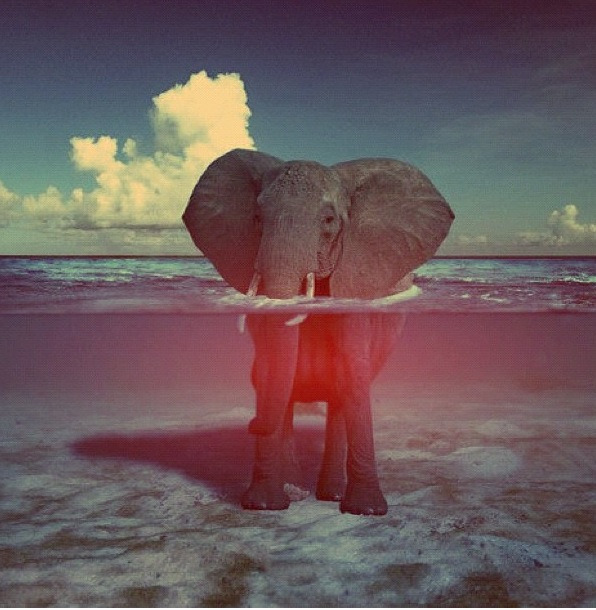
🐘 

 
ScienceDaily (Nov. 11, 2012) — Fat cells store excess energy and signal these levels to the brain. In a new study this week in Nature Medicine, Georgios Paschos PhD, a research associate in the lab of Garret FitzGerald, MD, FRS director of the Institute for Translational Medicine and Therapeutics, Perelman School of Medicine, University of Pennsylvania, shows that deletion of the clock gene Arntl, also known as Bmal1, in fat cells, causes mice to become obese, with a shift in the timing of when this nocturnal species normally eats. These findings shed light on the complex causes of obesity in humans.

The Penn studies are surprising in two respects. "The first is that a relatively modest shift in food consumption into what is normally the rest period for mice can favor energy storage," says Paschos. "Our mice became obese without consuming more calories." Indeed, the Penn researchers could also cause obesity in normal mice by replicating the altered pattern of food consumption observed in mice with a broken clock in their fat cells.
This behavioral change in the mice is somewhat akin to night-eating syndrome in humans, also associated with obesity and originally described by Penn's Albert Stunkard in 1955. The second surprising observation relates to the molecular clock itself. Traditionally, clocks in peripheral tissues are thought to follow the lead of the "master clock" in the SCN of the brain, a bit like members of an orchestra following a conductor. "While we have long known that peripheral clocks have some capacity for autonomy -- the percussionist can bang the drum without instructions from the conductor -- here we see that the orchestrated behavior of the percussionist can, itself, influence the conductor," explains FitzGerald.
Daily intake of food is driven by oscillating expression of genes that drive and suppress appetite in the hypothalamus. When the clock was broken in fat cells, the Penn investigators found that this hypothalamic rhythm was disrupted to favor food consumption at the time of inappropriate intake -- daytime in mice, nighttime in humans.
When a species' typical daily rhythm is thrown off, changes in metabolism also happen. For example, in people, night shift workers have an increased prevalence of obesity and metabolic syndrome, and patients with sleep disorders have a higher risk for developing obesity. Also, less sleep means more weight gain in healthy men and women.
Balancing Act Balancing energy levels in the body requires integrating mul¬tiple signals between the central nervous system and outlying tissues, such as the liver and heart. Fat cells not only store and release energy but also communicate with the brain about the amount of stored energy via the hormone leptin. When leptin is secreted, it causes more energy to be used and less eating via pathways in the hypothalamus.
The Penn team found that only a handful of genes were altered when the clock was broken in fat cells and these governed how unsaturated fatty acids, such as eicosapentaenoic acid (EPA) and docosahexaenoic acid (DHA) were released into the blood stream. Interestingly, these are the same fatty acids that are typically associated with fish oils. Sure enough, levels of EPA and DHA were low in both plasma and in the hypothalamus at the time of inappropriate feeding.
"To our amazement, we were able to rescue the entire phenotype -- inappropriate fatty acid oscillation and gene expression in the hypothalamus, feeding pattern and obesity -- by supplementing EPA and DHA to the knock-out animals," notes Paschos.
The findings point to a role for the fat cell clock molecules in organizing energy regulation and the timing of eating by communicating with the hypothalamus, which ultimately affects stored energy and body weight.
Taken together, these studies emphasize the importance of the molecular clock as an orchestrator of metabolism and reflect a cen¬tral role for fat cells in the integration of food intake and energy expenditure.
"Our findings show that short-term changes have an immediate effect on the rhythms of eating," says FitzGerald. "Over time, these changes lead to an increase in body weight. The conductor is indeed influenced by the percussionist."
This work was supported by the National Heart Lung and Blood Institute (RO1 HL097800) and the Medical Research Council (grant UD99999906).
Co-authors include Salam Ibrahim, Wen-Liang Song, Takeshige Kunieda, Gregory Grant, Teresa M Reyes, Fenfen Wang, and John A Lawson, all from Penn.
Share this story on Facebook, Twitter, and Google:
Other social bookmarking and sharing tools:

Story Source:
The above story is reprinted from materials provided by Perelman School of Medicine at the University of Pennsylvania, via Newswise.
Note: Materials may be edited for content and length. For further information, please contact the source cited above.

Journal Reference:
  1. Georgios K Paschos, Salam Ibrahim, Wen-Liang Song, Takeshige Kunieda, Gregory Grant, Teresa M Reyes, Christopher A Bradfield, Cheryl H Vaughan, Michael Eiden, Mojgan Masoodi, Julian L Griffin, Fenfen Wang, John A Lawson, Garret A FitzGerald. Obesity in mice with adipocyte-specific deletion of clock component Arntl. Nature Medicine, 2012; DOI: 10.1038/nm.2979

Tuesday, July 31, 2012

Wellness


Colloidal gold is made up of tiny gold particles that are suspended in liquid and taken by mouth. Like colloidal silver, colloidal gold has been taken for medicinal purposes for centuries. Native Americans routinely boiled water with a gold nugget; the Chinese continue to cook dishes with a gold coin. This way the gold leaches its nutritional benefits into the food....more here

 
 Reishi uplifts the spirit and builds protective power, a true Crown Chakra herb...more here


Shilajit is a natural mineral that exudes from the ancient rocks of the Himalayan mountains.  A key mineral supplement of the Ayurvedic pharmacopoeia, Shilajit is known as a panacea for its strengthening and rejuvenative qualities.  Shilajit is beneficial on its own and also improves the potency and effectiveness of other herbs...more here

More Sunlight!!!


Saturday, July 28, 2012

Monday, July 23, 2012

Monday, July 16, 2012

What I love...

Summer Fun Always


Monday, July 2, 2012

▼Lizzy Mercier Descloux ▼ Circa (1956-2004)

No Wave/Mutant Disco....everyones favorite ....


                    right...

One Day 

...Her style influenced so many, but only after her transition...love...Move forward


Play Only at 3:38


Monday, June 25, 2012

Sunday, June 24, 2012

Favorite Books on Physical, Emotional, & Spiritual Health


Peace!  I've been doing some heavy reading & research over the last few months about healing the body naturally.  I believe the body can heal itself given the right conditions to do so.  The truth is that there is no magic drug, herb, or even food that can be used to cure disease & injury.  The body heals itself!

When people start cleaning up their diet they feel better & have more energy.  This is not because of the "super foods" they are eating, or because of the vitamins & minerals they are getting, but because they body no longer has to fight against the acid & mucous-forming foods they once ate (meat, dairy, grains, neurotoxins, pesticides, GMO, salt, etc.).  It's not as much about what you are eating, but what you are not eating.  This gives the body a chance to alkalize, detoxify, & regenerate itself at the cellular level.  Of course we need organic fruits & vegetables to nourish our cells & give us energy, but the foods aren't what heal us.  I could go on all day, but instead will drop some book titles for those who are interested.

I've personally experienced many positive results with a low-fat raw vegan diet with regards to healing, mental clarity, energy, weight loss, spirituality, digestion, relationships, productivity, well-being, recovery time from exercise, reversing depression, & more - way more than I expected.  If you're interested in any of this stuff at all, but don't know where to start - please check out the following books!

The Detox Miracle Sourcebook by Dr. Robert Morse


The 80/10/10 Diet by Dr. Douglas Graham


Mucusless Diet Healing System by Arnold Ehret


Alkalize or Die by Dr. Theodore A. Baroody


The China Study


Dying To Have Known

Peace - this documentary is powerful & highly recommended.  For those that prefer Netflix - it's available on the instant stream as well...

Saturday, June 16, 2012

Five Fruits to keep you Cool this Summer

These are time of scorching heat. Sun is ruthless and the heat wave unsparing. But these are also the time when exotic fruits bloom in plenty.
And these fruits can have an immensely chilling effect on us. But the problem comes when an entire generation falls for Coke and Pepsi and gets estranged with the bounties of nature. People are quite oblivious about the health properties of these fruits. And even if they know, few care about procuring them.
MensXP recommends these five summer fruits to beat the heat this summer:

Black Plum or Jambul

alt
The fruit is useful in spleen enlargement. The seed of the fruit is well-known diabetes. It reduces the quantity of sugar in the urine and quenches the maddening thirst. The fruit is also a good source of antioxidants.

Litchi

alt
The luscious litchi/lychee or Chinese Hazelnut is a very delicious fruit. People eagerly wait for its arrival during the summers. May-June is the best season for the fruit. This sub-tropical fruit has very good cooling, demulcent and aphrodisiac properties. It is also a good thirst-quencher.

Mango

alt
It's not for nothing that Mango is called the 'King of Fruits' in India. The vastly delicious fruit is a storehouse of vitamins A and C. The ripe mango tones the heart, improves complexion, stimulates hunger, improves vision and is greatly helpful in liver disorders, loss of weight and physical abnormalities. The popular mango powder (amchur) made from green/unripe mango is very beneficial in scurvy and pyorrhea.

Muskmelon

alt
Muskmelon is a popular tropical fruit which is readily available during the summers. The fruit contains Vitamin A, B, C and minerals like magnesium, sodium and potassium. It has zero cholesterol and is safe for blood cholesterol patients. When consumed with jaggery, it helps in the curing of skin diseases. It greatly reduces the body heat when consumed regularly.

Watermelon

alt
The succulent, scarlet-red watermelon is a delicious and health-building fruit. It contains large quantities of easily assimilable sugar. Being an alkaline fruit, it can be easily enjoyed by persons with acidosis. Its juice quench the thirst like anything. Rich in vitamin A,B, and C, products based on its juice can serve as wonderful cooling drinks. The fruit is also beneficial for combating hypertension.

DOCs▲▲▲


DOCUMENTARY: The United States of Hoodoo
Written by Darius James and Oliver Hardt and directed by Hardt, the documentary The United States of Hoodoo explores the influence of African spirituality and religious customs, brought to the Americas by the Trans-Atlantic Slave trade centuries ago, in American popular culture.
Excerpt from the official synopsis:
The United States of Hoodoo is a road trip to the sources of black popular culture in America. The film’s main character is African-American writer Darius James who is known for his often bitingly satirical and self-ironic texts on music, film and literature. The film’s story begins when Darius´ world is turned inside out after his father´s death.
Uprooted from his life in Berlin, he unwillingly returns to his childhood home. All that remains from his father is his mask collection and a cardboard box filled with ashes. His father had been a painter and sculptor, his work drawing deeply on manifestations of African-based spirituality.Yet while he lived he fiercely rejected any idea of being inspired by the old gods of Africa.
Back in a house that is now his, but not quite, Darius finds himself confronted with many questions about his own life. In need of answers he sets off on a search, not for his roots but for traces of the spiritual energy that fueled and informed a whole culture.
(read more)