KEO for DVS from cadence studios on Vimeo.

KEO for DVS from cadence studios on Vimeo.

1 bunch of carrots with some of its greens (Vitamin A{eyes},Vitamin C,Vitamin K,}
1 avocado (Folate, Potassium, B6, Fiber, Copper, Vitamin C, Vitamin K)
1/2 lemon (Vitamin C, Phytonutrients with Antioxidants)
About 1/3 inch fresh ginger (Potassium, Copper, Magnesium, Maganese, B6)
Pinch of sea salt and cayenne pepperSpring or distilled water
Put all ingredients in your juicer.
Add clean water to cover all ingredients.
Blend.
Drink immediately so that oxidation doesn't damage the integrity of the vegetables.



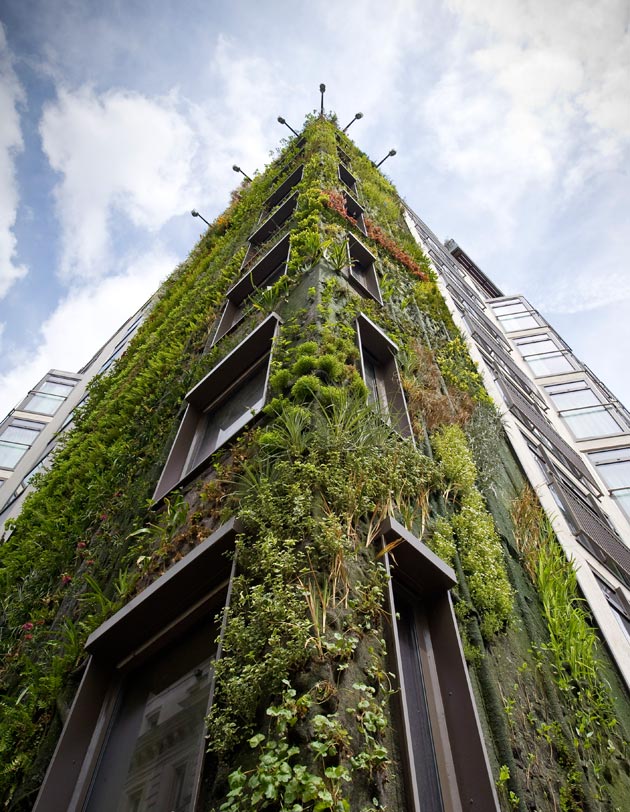
The study, by researchers at Lawrence Berkeley National Laboratory and Oak Ridge National Laboratory, outlines a variety of strategies for augmenting the processes that plants use to sequester carbon dioxide from the air and convert it into long-lived forms of carbon, first in vegetation and ultimately in soil.
Besides increasing the efficiency of plants' absorption of light, researchers might be able to genetically alter plants so they send more carbon into their roots--where some may be converted into soil carbon and remain out of circulation for centuries. Other possibilities include altering plants so that they can better withstand the stresses of growing on marginal land, and so that they yield improved bioenergy and food crops. Such innovations might, in combination, boost substantially the amount of carbon that vegetation naturally extracts from air, according to the authors' estimates.
The researchers stress that the use of genetically engineered plants for carbon sequestration is only one of many policy initiatives and technical tools that might boost the carbon sequestration already occurring in natural vegetation and crops.
The article, by Christer Jansson, Stan D. Wullschleger, Udaya C. Kalluri, and Gerald A. Tuskan, is the first in a Special Section in the October BioScience that includes several perspectives on the prospects for enhancing biological carbon sequestration. Other articles in the section analyze the substantial ecological and economic constraints that limit such efforts. One article discusses the prospects for sequestering carbon by culturing algae to produce biofuel feedstocks; one proposes a modification of the current regulatory climate for producing genetically engineered trees in the United States; and one discusses societal perceptions of the issues surrounding the use of genetically altered organisms to ameliorate warming attributed to the buildup of greenhouse gases.
Story Source:
The above story is reprinted (with editorial adaptations by ScienceDaily staff) from materials provided by American Institute of Biological Sciences, via EurekAlert!, a service of AAAS.

Ever walk into one of those places where everything is perfect; the architecture, the furniture, the art, even the resident dog looks manufactured for this space…but something is clearly, eerily missing? You can’t quite put your finger on it but it’s almost like a pulse is absent, some palpable expression of life.
House Plants do more than just brighten up a room with color and living energy. Along with being pleasing to the eye, they bring real health benefits to your body. Not only do complaints about headaches, stress, heart/circulation-symptoms and colds decrease when indoor plants are present, according to Dr. Leona Rogler in "The comprehensive office series," but also richly decorating a room with plants can help to keep the air clean. If you read Self-Assessment to Determine if You May Have Biological Pollutants in Your Home, then you know how important indoor air quality can be, and how widespread indoor air contamination really is.

When it came to the importance of green, its life and death. Day and night. The Case Study Houses were big on nature’s role in softening industrial materials. How cozy is the use of green texture in this room? A wall of green not only softens the hardness of this furniture but creates a sanctuary-like atmosphere. There are so many styles going on in this room but don’t you think the plants help combat the confusion? Focal plants are a must, especially in large open spaces where they bring drama and intimacy.


It’s fun to play with rhythm when plantscaping, which is created by repetition. And employing some slight variance helps reduce randomness. Line up 3 to 5 pots in a row, evenly spaced. This can also be achieved by using the same plant or varietals of the same plant, grouped together. I like to group things in odd numbers but that’s just me.
When it comes to shades of green, nature is the ultimate mix master. Green occupies more space in the visible spectrum than any other color, it is the most dominate color in the natural world but is also a neutral color, meaning, you technically cannot clash the green of your greens. But if you want to geek out a little, group greens by warm (deep shades such as red, pink, and purple) or cool tones (lighter shades like gray-green tints or white variegation). Or do a simple combo, as in the photo above.

A little bit goes a long way, particularly with sculptural or otherwise-striking botanicals. Imagine this room without nature’s presence (OK, it would still be cool but you get the point).
Also, proper illumination of plant life showcases it as the living art it is. up-lighting or other spot lighting brings plants out of the night time shadows and casts exciting shadow play against your architecture.
Plants are the essential element for transforming any space into a sanctuary. often brought in at the end of a project, as a mere after thought (tisk tisk, you’ll never make that mistake again!), greenery is the deep, cleansing, and utterly satisfying exhale at project completion; the one that says, “You’ve made it. Welcome home.”


 Posts
All Comments
Posts
All Comments